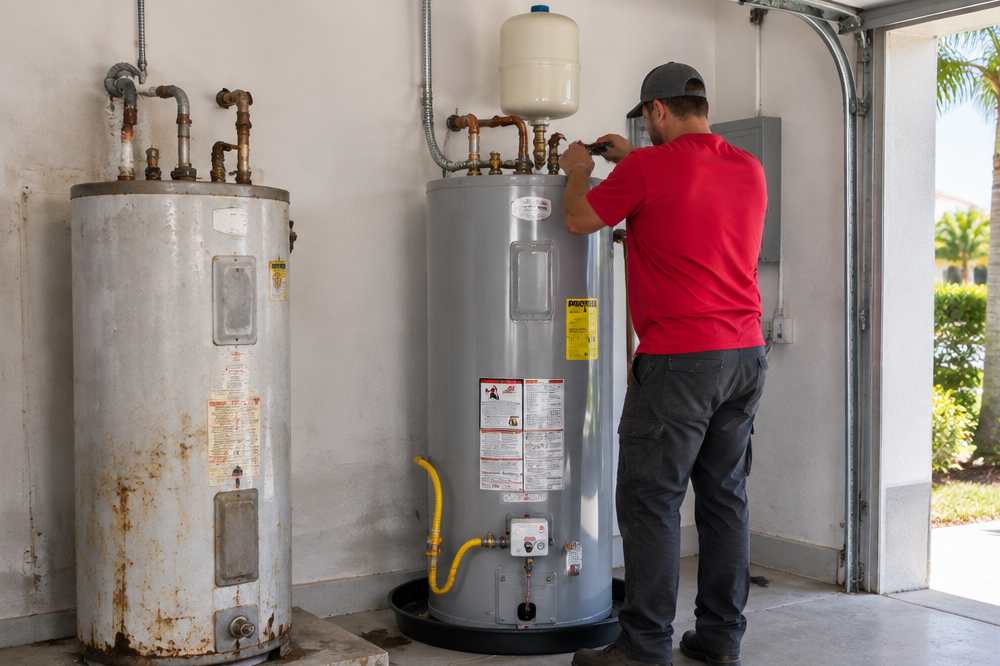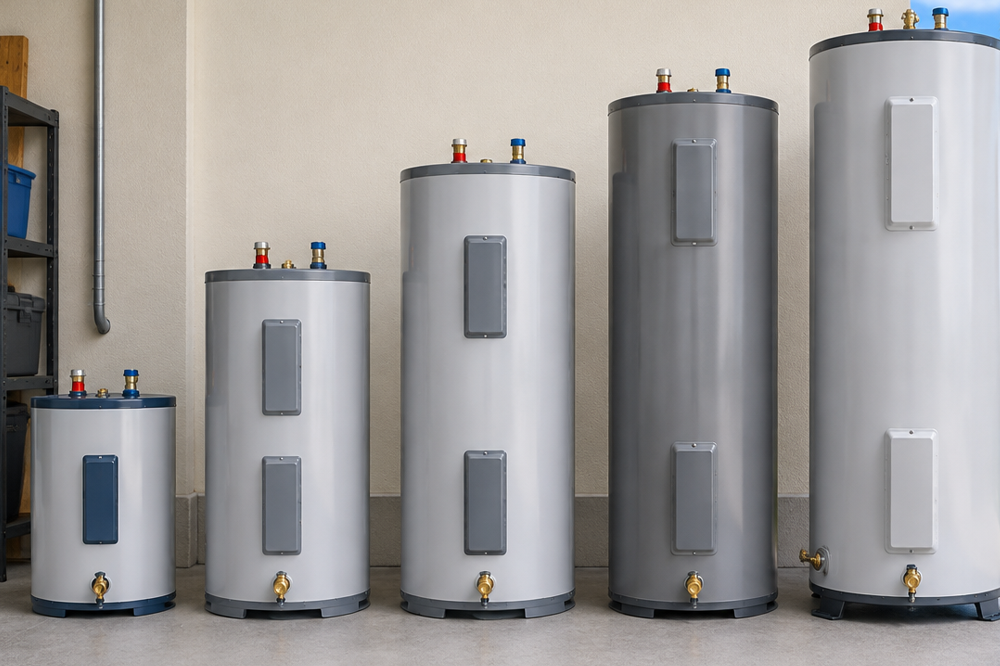

Few water heater problems are more frustrating than having hot water one minute and discovering the system has shut down the next. You may reset the breaker, relight the pilot, restart the unit, or wait for it to come back on, only to have the same problem happen again. For homeowners in Miami, Broward County, and throughout South Florida, a water heater that repeatedly shuts off can interrupt showers, laundry, dishwashing, and the everyday routines that depend on a reliable supply of hot water.
The cause is not always the water heater itself failing completely. A water heater may shut down because a thermostat is giving the wrong temperature reading, an electrical component is losing power, a gas burner cannot maintain a flame, or a built-in safety control detects an operating condition that requires the system to stop. Tankless and hybrid models can also shut down and display fault codes when sensors detect problems. Understanding what the shutdown is telling you can help determine whether the issue needs a simple correction, professional repair, or eventually water heater replacement.
If your water heater keeps turning off, the most common causes include thermostat problems, electrical interruptions, gas supply or ignition failures, overheating protection, defective heating components, sediment or scale buildup, and control or sensor problems.
The exact cause depends heavily on the type of system you have. A traditional tank water heater operates differently from a gas tankless unit or a hybrid water heater, so the same symptom can point to very different problems. Repeated shutdowns should not simply be reset indefinitely. If the heater will not stay on, identifying why its safety or operating controls are stopping it is more important than repeatedly restarting it.
The thermostat tells a water heater when the water needs additional heat and when the heating cycle should stop. When it is operating normally, this cycling happens automatically. However, a thermostat that is failing, misreading the water temperature, or communicating incorrectly with another component may cause inconsistent operation.
On an electric tank water heater, thermostat problems can also be associated with the high-limit safety control tripping. Manufacturer troubleshooting information notes that thermostat problems, grounded heating elements, and related electrical faults can cause the high-limit switch to activate.
Homeowners may notice symptoms such as:
A thermostat should not automatically be blamed for every shutdown. Testing may also reveal a problem with the heating element, wiring, or safety control. That is why repeated thermostat-related problems are usually better diagnosed than addressed by repeatedly pressing the reset button.
Electric tank water heaters, electric tankless systems, and many hybrid water heaters rely heavily on electrical components. Gas water heaters with electronic ignition or powered controls can require electricity as well. Therefore, an interruption does not always mean the water heater itself has completely failed.
A tripped circuit breaker is one obvious possibility. However, if the breaker trips again after being reset, there may be an electrical problem that requires further diagnosis. Depending on the system, technicians may need to evaluate heating elements, thermostats, wiring connections, controls, or other electrical components.
This distinction matters because a breaker is designed to protect the electrical circuit. Continually resetting a breaker without determining why it trips can leave the underlying problem unresolved.
If your hot water heater turns off immediately after being restarted, loses power repeatedly, smells like overheated electrical material, or shows signs of damaged wiring, stop troubleshooting the unit yourself and arrange for qualified service.
If you’re noticing any of these issues, our water heater repair jacksonville team can diagnose and fix it fast.
Gas water heaters require several things to happen correctly before the burner can provide heat. Depending on the model, that may include adequate gas supply, successful ignition, a stable pilot or burner flame, proper flame detection, and safe venting.
Older or standing-pilot systems may use a thermocouple or thermopile as part of the safety system. If that component cannot properly detect or support the pilot flame, the gas valve may prevent continued gas flow. Manufacturer guidance notes that a failed thermocouple or thermopile can result in a pilot that will not remain lit.
Electronic ignition systems can experience different problems. An ignition control may attempt to light the burner but shut the system down when a flame is not established or detected correctly. Some modern systems provide diagnostic lights or error codes that help narrow down the cause.
Possible signs of an ignition-related problem include:
If you smell gas, do not continue attempting to relight or troubleshoot the water heater. The U.S. Consumer Product Safety Commission advises leaving the home immediately and contacting the appropriate gas authorities from outside the property rather than operating electronics inside. You can review the CPSC’s gas and carbon monoxide safety guidance.
A water heater that shuts itself down is not always experiencing a failed safety device. Sometimes the safety device is responding correctly to another problem.
Electric water heaters commonly include high-limit protection intended to stop heating when an unsafe temperature condition is detected. A malfunctioning thermostat or grounded heating element, for example, can contribute to overheating and trigger the protective control.
This is particularly important when someone discovers that pressing the red reset button restores hot water. A single reset after an isolated interruption may not necessarily indicate a major problem, but a reset button that repeatedly trips should be treated as a symptom.
In practice, a technician may need to determine whether the high-limit control itself is defective or whether it is correctly responding to a thermostat, heating element, wiring, or temperature problem.
Tankless and hybrid water heaters use additional sensors and controls. Depending on the model, the unit may stop operating when it detects an unsafe temperature, abnormal airflow, ignition failure, insufficient operating conditions, or another fault. Always consult the manufacturer’s manual for the meaning of a specific error code rather than assuming all codes indicate the same failure.
A water heater that shuts off shortly after starting may have a thermostat, heating element, ignition, flame-sensing, electrical, airflow, or safety-control problem. Tankless heaters may also shut down because a sensor or control detects an operating fault. The exact cause depends on the type and model of water heater.
Not necessarily. The decision depends on what is causing the shutdown, the overall condition of the heater, whether there are leaks or significant deterioration, the repair needed, and whether additional problems are developing. A diagnosis should generally come before deciding between repair and replacement.
Look for a qualified water heater professional who can service your specific type of equipment and diagnose the actual cause of the shutdown. If you are searching for water heater service near you in South Florida, describe whether the problem involves loss of power, a pilot or burner shutting down, a tripped reset, an error code, or inconsistent hot water.
Traditional electric tank water heaters commonly use electric heating elements inside the tank. If an element fails, becomes grounded, or experiences another electrical problem, the result may be partial hot water, no hot water, overheating-related behavior, or a tripped safety control. Manufacturer troubleshooting guidance specifically identifies failed heating elements as a common source of hot water problems and grounded elements as one possible cause of excessive heating.
Gas systems rely on a different collection of components, such as the burner, gas control, ignition components, flame-sensing equipment, and venting system. Tankless systems add flow sensors, electronic controls, heat exchangers, fans, and other model-specific components.
That is one reason diagnosing a water heater that won’t stay on should begin with identifying the type of heater and observing exactly how it fails. “The water heater shuts off” may describe several different situations:
Each pattern points the diagnostic process in a different direction.
Not every recurring operating problem begins with an electrical or gas component. Mineral deposits and sediment can accumulate inside water-heating equipment over time. In tank-style systems, sediment can settle near the bottom of the tank and interfere with efficient heat transfer. Manufacturer maintenance guidance recommends flushing according to the requirements of the specific heater and its operating manual.
Common clues that buildup may be affecting a tank include rumbling, popping, or other unusual sounds during heating. However, flushing should not be treated as a guaranteed solution for a heater that repeatedly shuts down. A system that is already experiencing an electrical, ignition, overheating, or control problem needs that issue diagnosed separately.
Routine water heater maintenance can help identify developing problems before they become more disruptive. Depending on the equipment, maintenance may involve visual inspection, checking operating conditions, evaluating connections, and performing water heater flushing when appropriate for the system.
For heat pump systems specifically, ENERGY STAR recommends following the manufacturer’s operation and maintenance instructions because installation conditions, airflow requirements, condensate management, and controls vary between models. Its heat pump water heater guide provides additional information about how these systems operate.
A tankless water heater does not operate continuously. It normally activates when sufficient hot-water demand is detected and stops heating when that demand ends. Therefore, normal cycling should not be confused with a malfunction.
A problem becomes more likely when the unit shuts down while hot water is actively being used, repeatedly fails to ignite, displays an error code, or produces alternating hot and cold water.
Depending on the model and fuel type, diagnosis may involve checking the ignition system, gas supply, electrical supply, airflow or venting, water flow, sensors, controls, and mineral buildup. Because modern tankless systems rely heavily on electronic diagnostics, the error code and manufacturer documentation can often provide useful direction before components are replaced.
Occasional interruptions can have simple explanations, but a water heater keeps shutting off for a reason. When the same shutdown returns after the heater has been reset or restarted, it is usually time to diagnose the underlying problem rather than continuing the reset cycle.
Consider arranging professional water heater repair when:
For homeowners searching for water heater repair near me, the goal should be more than getting the heater temporarily restarted. A useful service visit should determine what caused the shutdown, whether the affected component can be repaired, and whether other conditions contributed to the failure.
Homeowners in South Florida can also review service options for water heaters in Broward County when dealing with recurring hot water problems.
There are some basic observations homeowners can safely make, such as checking whether a breaker has tripped, reading an error code, looking for visible water around the tank, or reviewing the operating instructions provided by the manufacturer.
However, repairs involving gas valves, burners, electrical wiring, heating elements, internal controls, venting, or recurring safety shutdowns should generally be handled by someone qualified to work on that equipment.
Gas-fired equipment deserves particular caution because improper combustion or venting can create carbon monoxide hazards. The CPSC identifies malfunctioning fuel-burning water heaters as a possible source of carbon monoxide and recommends professional inspection and proper maintenance of fuel-burning appliances and their venting systems. See the CPSC carbon monoxide safety information for additional guidance.
If a carbon monoxide alarm activates, occupants experience possible carbon monoxide symptoms, or you smell gas, treat that as a safety issue rather than a routine water heater troubleshooting problem.
There is no single repair price that applies whenever a water heater won’t stay on because the underlying causes vary significantly. A thermostat replacement is a different repair from diagnosing a tankless ignition problem, replacing damaged electrical components, or correcting multiple issues on an older system.
Factors that can affect the scope, cost, and time required include:
The right decision is not automatically to repair every water heater or replace every water heater that shuts down. If the underlying problem is isolated and the rest of the system is in suitable condition, repair may make sense. When a heater has significant deterioration, leaking, repeated component failures, or other substantial problems, discussing water heater installation options may be more practical.
If your water heater keeps turning off, the shutdown itself is only part of the diagnosis. The important question is what caused the heater to stop.
Thermostats, breakers, heating elements, gas ignition systems, flame-sensing components, high-limit controls, sensors, sediment, and model-specific safety systems can all play a role. Because these problems overlap, replacing a part based only on the symptom can result in unnecessary work without resolving the actual cause.
For homeowners looking for water heater repair in Miami or water heater repair in Broward County, documenting what happens before calling for service can make troubleshooting easier. Note whether the unit loses all power, trips a breaker, extinguishes the pilot, displays a code, produces excessively hot water, or shuts down only while hot water is being used.
Those details give a technician a much clearer starting point and can help determine whether the system needs maintenance, repair, or replacement.