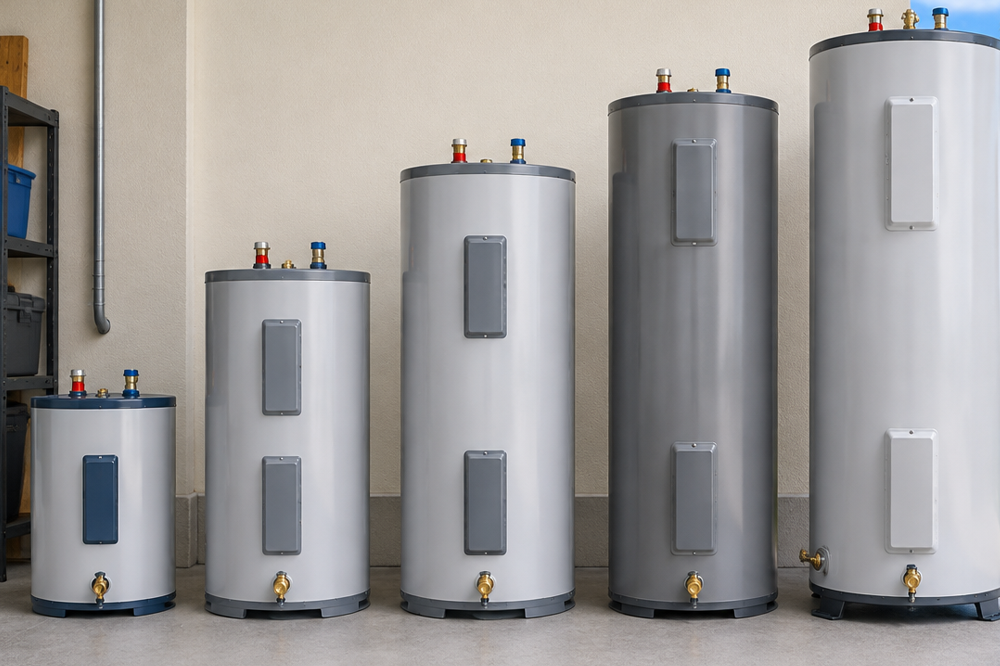

A water heater can continue producing hot water even when small problems are developing behind the scenes. A minor leak around a connection, sediment collecting at the bottom of the tank, a worn component, or corrosion around a fitting may not immediately stop the system from working. For homeowners in Plantation, Fort Lauderdale, Miramar, Davie, and throughout Broward County, that can make regular maintenance easy to overlook until the morning the shower suddenly runs cold or water appears around the base of the unit.
A water heater tune-up is meant to catch those issues earlier. Rather than waiting for something to fail, a technician evaluates the condition and operation of the system, checks important safety and heating components, and identifies maintenance that may help the water heater continue operating properly. The exact service can vary depending on whether you have a traditional tank, tankless, gas, electric, or hybrid system, so a tune-up should be based on the equipment installed in your home rather than a one-size-fits-all checklist.
A typical water heater tune-up includes a visual inspection, leak and corrosion checks, examination of important operating components, temperature and performance testing, and an evaluation of whether the unit needs flushing or other maintenance. Tank-style systems may also require inspection of components such as the temperature and pressure relief valve and anode rod, while tankless and hybrid systems have their own maintenance requirements.
For example, Rheem’s tank water heater maintenance guidance includes draining and flushing, inspecting the anode rod and temperature and pressure relief valve, and checking heating elements, burners, or venting depending on the type of water heater.
The purpose is not simply to “clean” the water heater. A good water heater maintenance service should help determine how the system is operating now, whether any components are beginning to deteriorate, and whether corrective work should be considered before a more disruptive failure occurs.
The terms water heater tune-up and water heater maintenance visit are often used interchangeably. In most cases, both refer to preventative service performed while the water heater is still operating. The technician is looking for wear, buildup, leaks, corrosion, improper operation, and other developing concerns.
A repair is different because there is usually already a specific problem to correct. If your water heater is leaking, producing little or no hot water, repeatedly shutting off, tripping a breaker, making unusual noises, or displaying an error code, the visit may become a diagnostic and water heater repair appointment instead of routine maintenance.
In practical terms:
The distinction matters because homeowners searching for a “water heater tune up near me” may actually have symptoms that need diagnosis rather than routine maintenance.
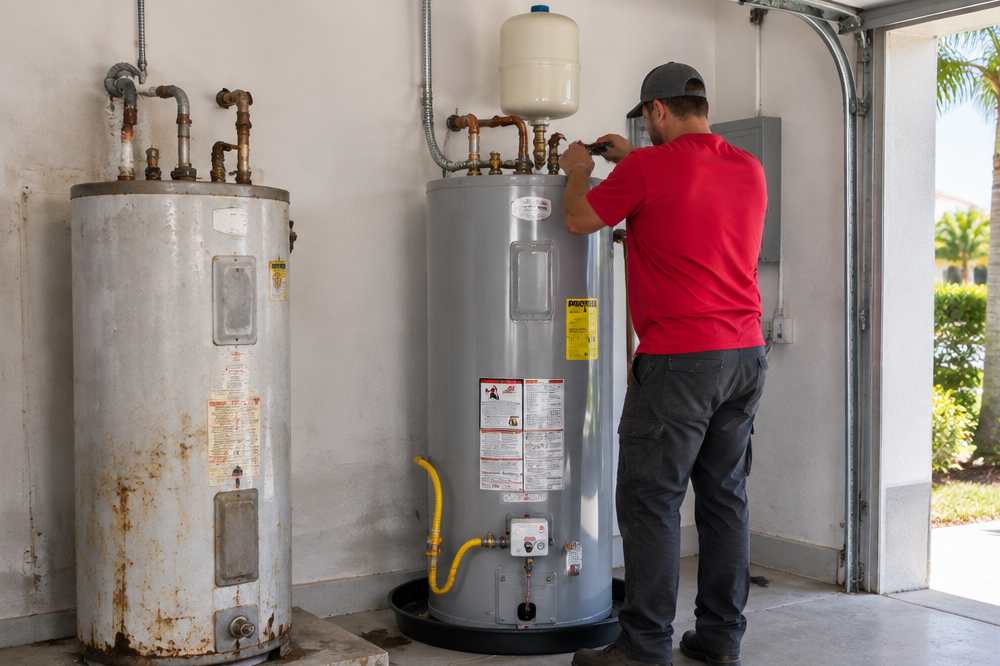
A water heater inspection usually begins before anything is taken apart. The technician looks at the overall condition of the system, its connections, nearby piping, valves, wiring or gas connections, and the area surrounding the unit.
Visible conditions can provide useful clues. Moisture around fittings may indicate a slow leak. Rust staining can point to ongoing corrosion. A damaged drain pan, deteriorated piping connection, or evidence of previous leaking may also require attention even if the water heater is still producing hot water.
If you’re noticing any of these issues, our water heater repair tampa team can diagnose and fix it fast.
The technician may also consider:
This visual portion of a water heater inspection is important because some developing problems do not immediately affect hot water temperature.
Small leaks deserve attention because water can travel along pipes, fittings, or the exterior of a tank before reaching the floor. As a result, a puddle near the water heater does not always identify the exact source.
During a tune-up, the technician can inspect common leak points such as connections, valves, drain fittings, and the tank itself. The location of the moisture matters. A loose or deteriorated connection may be repairable, while water coming through a compromised storage tank can indicate a more serious issue.
Corrosion is also evaluated. Surface rust on a fitting is different from significant deterioration of the tank or critical components. An experienced technician looks at where corrosion is occurring, how extensive it appears, and whether there are other signs that help explain the condition.
If the tank itself appears compromised, routine maintenance may no longer be the appropriate solution. At that point, homeowners may need to discuss water heater replacement options rather than continuing with a standard tune-up.
The components inspected during hot water heater maintenance depend heavily on the system type. A traditional electric tank water heater operates differently from a gas unit, and a tankless water heater has different service requirements than either one.
On a tank-style system, maintenance may involve evaluating the temperature and pressure relief valve, thermostat, heating elements or burner components, drain valve, and anode rod where applicable. Manufacturer guidance commonly includes several of these items as part of routine tank maintenance.
A technician may inspect:
Hybrid systems require additional considerations. ENERGY STAR notes that heat pump water heaters may need maintenance involving air filters and condensate drainage in addition to conventional water heater service. Its guidance recommends reviewing the specific manufacturer’s instructions because maintenance requirements vary by model.
Homeowners with this type of equipment can learn more about hybrid water heater systems before scheduling service.
Sediment gradually collects inside many tank-style water heaters as minerals and other material settle out of the water. How quickly buildup occurs depends on factors such as water quality, household usage, water temperature, equipment design, and maintenance history.
A technician can determine whether professional water heater flushing is appropriate based on the unit’s condition. Flushing involves draining water from the tank and removing accumulated material through the drain system. Manufacturer maintenance guidance often includes flushing as a routine maintenance task.
However, maintenance history matters. An older tank that has gone many years without service may require a different approach than a newer system that has been maintained regularly. This is one reason homeowners should avoid assuming that every water heater needs exactly the same procedure.
Tankless systems can also experience mineral accumulation, but the maintenance process is different. These systems may require descaling according to the manufacturer’s requirements rather than traditional tank flushing.
A water heater tune-up generally includes a visual inspection, leak and corrosion checks, inspection of operating and safety components, performance testing, and an evaluation of sediment or mineral buildup. The exact checklist depends on whether the system is tank, tankless, gas, electric, or hybrid.
The manufacturer's maintenance schedule should be followed whenever available. Many homeowners choose to have the system professionally reviewed on a regular basis, often around once a year, but the appropriate interval depends on the unit, household usage, water conditions, and previous maintenance.
Consider scheduling a water heater inspection if the unit has not been serviced recently, you do not know its maintenance history, you notice changing water temperature, hear new noises, see corrosion or moisture, or want the system evaluated before a problem develops.
A tune-up should also confirm that the water heater is actually performing as expected. Producing hot water alone does not necessarily mean everything is operating correctly.
A technician may evaluate whether the unit starts, heats, and shuts down properly. Water temperature can also be checked to determine whether the thermostat or controls appear to be functioning appropriately. The U.S. Department of Energy provides consumer guidance about water heater temperature settings, including information about the relationship between temperature settings, energy use, and scalding risk.
Performance testing may reveal issues such as:
These findings help separate routine maintenance issues from problems that require further diagnosis.
One of the most useful parts of a water heater tune-up is simply having the system evaluated while it is still functioning. Many service calls begin with a homeowner saying the water heater “was working fine yesterday.” In reality, there may have been warning signs that were easy to miss.
A maintenance visit might uncover a slow connection leak, deteriorating valve, abnormal corrosion, excessive sediment, damaged wiring, a weak heating component, or another condition that has not yet caused complete failure.
Finding a developing issue does not automatically mean an expensive repair or replacement is necessary. Sometimes the appropriate response is continued monitoring or straightforward maintenance. In other situations, the inspection may show that professional water heater repair should be scheduled before the condition becomes more disruptive.
The important part is having better information. Preventative service gives homeowners an opportunity to make a planned decision instead of making one while there is no hot water or water is leaking into the surrounding area.
There is no maintenance schedule that applies perfectly to every water heater. The manufacturer’s owner’s manual should be the starting point because maintenance recommendations vary by equipment type and model.
Some manufacturers recommend routine flushing and periodic inspection of components such as the anode rod and relief valve for tank-style systems. For example, Rheem provides guidance recommending regular tank flushing and inspection of maintenance components. Heat pump water heaters can have additional requirements such as cleaning air filters and maintaining condensate lines.
For many homeowners, scheduling a professional evaluation approximately once a year provides a convenient opportunity to review the system, but the correct interval may be different depending on the manufacturer’s instructions, water conditions, equipment age, usage, and previous maintenance.
A homeowner who recently purchased a property and does not know the maintenance history may also benefit from having the water heater evaluated rather than assuming previous service was performed.
The cost and amount of work involved in a water heater tune-up can vary considerably. A straightforward inspection of a relatively new, accessible system is different from servicing an older unit with heavy sediment, deteriorated components, or difficult access.
Factors that can affect the service include:
Location can matter as well. A water heater positioned in an open garage may be easier to service than one installed in a tight closet or difficult-to-reach area.
For homeowners seeking water heater maintenance in Broward County, the most useful estimate is one based on the actual equipment and requested maintenance rather than a generic price that assumes every system requires the same work.
Homeowners searching for water heater maintenance Plantation FL, water heater maintenance Fort Lauderdale, or water heater service Broward County should look for maintenance that is appropriate for their specific equipment rather than simply requesting the same checklist for every system.
A traditional tank water heater may require inspection of the tank, relief valve, anode rod, heating components, and sediment accumulation. A tankless system may require descaling and inspection of its internal components. Hybrid systems add heat pump components, filters, and condensate management to the maintenance picture.
When scheduling professional water heater maintenance, it can help to provide the model, fuel type, approximate age if known, and any symptoms you have noticed. Even small details such as reduced hot water, occasional noises, moisture near the unit, or changing water temperature can help the technician understand what needs closer attention.
Basic observation is something every homeowner can do. You can look around the water heater for visible moisture, note whether the hot water temperature has changed, and pay attention to new sounds or error codes.
However, work involving electricity, gas systems, burners, internal components, pressurized hot water, safety valves, or significant disassembly should generally be handled by someone qualified to work on the equipment.
Contact a professional if you notice:
If the system has already stopped functioning, a water heater repair evaluation is generally more appropriate than trying to treat the visit as preventative maintenance.
A water heater tune-up is primarily about understanding the condition of equipment that most homeowners depend on every day but rarely inspect closely. It gives a technician an opportunity to check for leaks, corrosion, sediment, component wear, temperature concerns, and other conditions while the system is still operating.
It does not guarantee that a water heater will never fail, and maintenance cannot reverse significant tank deterioration or make every aging component new again. What it can do is provide a clearer picture of the system’s condition and identify maintenance or repairs that may deserve attention.
If you are searching for a water heater tune up near me in Plantation, Fort Lauderdale, Miramar, Davie, Miami-Dade, or elsewhere in South Florida, start by determining what type of water heater you have and whether you are experiencing any specific symptoms. From there, a qualified technician can determine whether you need routine maintenance, flushing, repair, or a more detailed inspection.