
Nobody thinks about their water heater until it’s the wrong one. Maybe the shower runs cold halfway through the second person’s turn, or maybe you’re paying to keep eighty gallons hot for a household of two. Getting water heater sizing Jacksonville homes call for right the first time saves you from both problems, and it isn’t as complicated as it sounds.
The simplest starting point is headcount. As a rough guide, one or two people are usually fine with a 30 to 40 gallon tank. Three to four people tend to do well with 50 gallons. Households of five or more often need 60 to 80 gallons.
That’s only a baseline, though. Two teenagers who each take a long shower use more than three adults on tight schedules, so treat these numbers as a first guess and not a final answer.
Most people shop by tank gallons, but the number that matters more is the first-hour rating. It tells you how much hot water the unit can deliver in one hour starting with a full tank, and that’s the stretch when your home is busiest, usually mornings and early evenings.
Here’s where water heater capacity gets misleading. A 50 gallon tank with a strong recovery rate can outperform a 60 gallon model that heats slowly. Always compare the first-hour rating on the yellow EnergyGuide label, not just the size printed on the front.
To find your real number, picture your busiest hour of the day and tally what’s running. A typical shower uses somewhere around 15 to 20 gallons. A dishwasher cycle takes about 6, and a load of laundry on warm can take 15 or more. Add those up and you’ll have a target that your unit’s first-hour rating should meet or beat.
Homes with a soaking tub, a rain shower head, or body sprays need extra attention. A big tub alone can drain most of a 40 gallon tank in one sitting.
Northeast Florida has a helpful advantage. Incoming water here is warmer than in colder states, so the heater doesn’t have to work as hard to reach your set temperature. That can make a mid-range unit perform better than the same one would up north.
On the other hand, plenty of local homes have heaters in garages or attics where space is limited, and that can restrict which models even fit. Measure the space, including the door or hatch you’ll have to get through, before you commit to anything.
Your household hot water demand isn’t just a headcount, it’s a pattern. If everyone showers between 6:30 and 8:00 a.m. while the dishwasher runs, you need more first-hour output than a family that spreads usage across the day.
Ask yourself a few honest questions. Do people run out of hot water at the same time of day? Do guests visit often? Are you planning to add a bathroom, or have kids who will soon be teenagers? Sizing for where your household will be in a few years usually beats sizing for today.
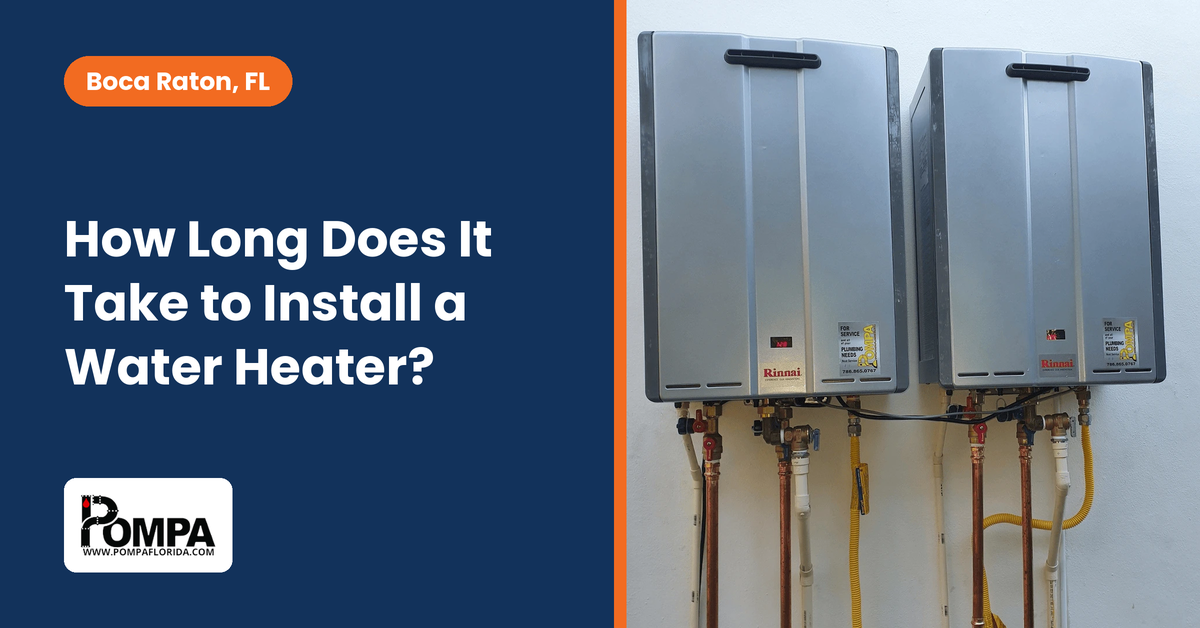
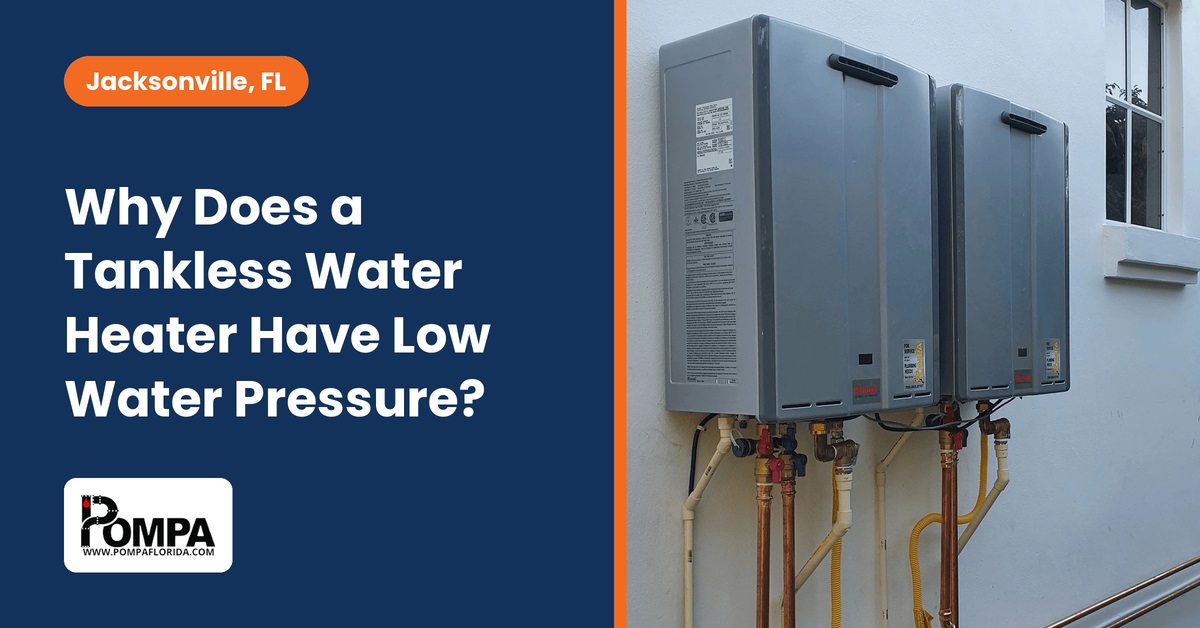
Tankless units are sized differently. Instead of gallons, you look at flow rate, measured in gallons per minute, and how many fixtures will run at once. A home with three bathrooms and simultaneous use needs a higher-output unit than a small condo.
Tankless models can supply continuous hot water and free up floor space, but they cost more upfront and may need upgraded gas lines or venting. For households with steady, predictable use, a well-chosen tank is often the more economical fit.
An undersized heater runs constantly, wears out faster, and leaves you with lukewarm showers. An oversized one wastes energy heating water you never touch and costs more to buy in the first place. Neither one is a good deal.
Numbers on a chart only go so far. A licensed plumber can look at your fixtures, your plumbing, and the spot where the unit will sit, then recommend a fit that actually works. Pompa Plumbing Group walks through these details with homeowners before anything is ordered, so the unit you end up with matches how your household really lives.
Need professional installation? Explore our water heater installation Jacksonville service.
It's usually too tight, since 50 to 60 gallons is safer, though a 40 gallon can work if showers are well spread out.
Roughly three to four back-to-back showers, depending on shower length and how efficient your fixtures are.
Probably not, so most households that large do better with a 65 to 80 gallon tank or a high-output tankless unit.
Generally no, and a 40 to 50 gallon tank is the more comfortable choice for four people.