
Discovering water around your water heater can turn an ordinary morning into a stressful situation. You may hear water running in the garage, notice a wet utility closet, lose hot water during a shower, or find moisture spreading toward nearby walls and flooring. For South Florida homeowners, responding quickly is especially important because water can travel beneath flooring, soak drywall, and remain trapped in enclosed areas.
However, moving quickly does not mean taking the water heater apart or attempting a complicated repair. The first priority is making the area safe, stopping additional water when possible, protecting the surrounding property, and giving the plumber accurate information. Whether you are dealing with a leaking tank, a failed heating element, a gas-related concern, or a complete loss of hot water, a few careful steps can reduce damage without exposing you to electrical, gas, pressure, or scalding hazards.
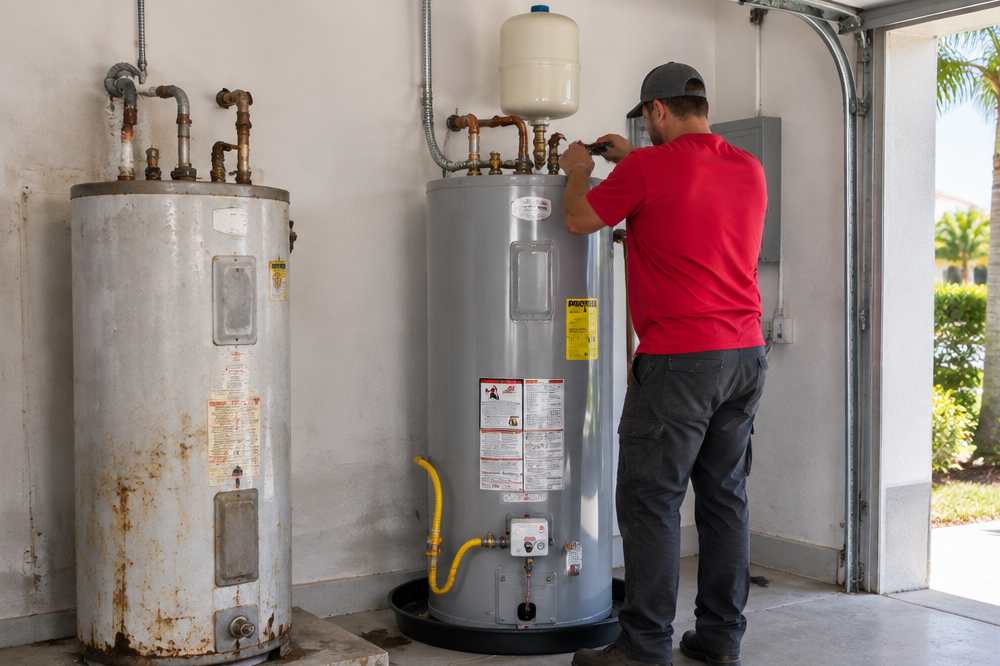
During a water heater emergency, shut off the water supply to the unit, disconnect its power or gas only when it is safe, and contain any leaking water. Avoid opening electrical panels on the appliance, disconnecting gas lines, removing heating elements, or plugging a pressure-relief discharge pipe.
Next, document where the water appears to be coming from and contact an emergency plumber or qualified water heater technician. A small drip from a connection may require a relatively straightforward water heater leak repair, while water coming through the tank body often indicates a more serious failure. The correct response depends on the heater type, the source of the leak, the condition of the equipment, and whether water has reached electrical components or building materials.
For a leaking water heater emergency, the first practical step is usually to stop additional water from entering the tank. Most tank-style water heaters have a cold-water supply line entering near the top of the unit. Look for a shutoff valve on that line. Depending on the installation, it may be a lever-style ball valve or a round handle that turns clockwise.
Close the valve carefully without forcing it. Older valves can become corroded, stiff, or fragile. If the valve does not move with moderate pressure, do not use a wrench or excessive force because breaking it could create a larger leak. Instead, shut off the home’s main water supply if you know where it is and can reach it safely. Once the water is off, open a hot-water faucet briefly to relieve some pressure, but remember that the water may still be hot.
Do not touch the temperature and pressure relief valve unless instructed by a professional. This safety device is designed to release excessive temperature or pressure. Never cap, plug, or obstruct its discharge pipe.
An electric water heater should not remain energized when the tank is leaking or empty. If the breaker panel is dry and safely accessible, switch off the breaker labeled for the water heater. Do not remove the heater’s access panels, touch exposed wiring, or stand in water while operating electrical equipment. Ready.gov advises people not to touch wet electrical equipment or handle electricity while standing in water. er heater, use the appliance’s control knob to turn the unit to “OFF” only when there is no gas odor and the area is safe. Do not disconnect the gas supply line or attempt to repair the burner, gas valve, pilot assembly, or venting system.
If you smell gas, hear hissing near a gas line, or suspect combustion gases are entering the home, leave immediately. Do not operate light switches, use a flame, start a vehicle in an attached garage, or use a phone while standing near the suspected leak. Call 911 and the gas utility from a safe location. The federal Pipeline and Hazardous Materials Safety Administration recommends leaving the area and contacting emergency services from somewhere away from the leak. Review its gas leak response guidance for additional safety information. tain a Leaking Water Heater Emergency
Once the water and energy source are safely controlled, focus on limiting damage. Use towels, a wet vacuum, buckets, or a mop to collect water. Move cardboard boxes, furniture, rugs, electronics, cleaning products, and other belongings away from the affected area. If water is still flowing quickly, prioritize safety and water shutoff rather than trying to save individual items.
Pay attention to places where water may be traveling. Water from a garage installation can spread along wall edges or enter an adjacent room. A utility-closet leak may run beneath flooring or into a lower level. Water can also collect behind baseboards and drywall even after the visible floor looks dry.
The U.S. Environmental Protection Agency recommends drying wet or damp materials within approximately 24 to 48 hours after a leak or spill when possible. Its guidance on mold and moisture explains why moisture control and prompt drying matter. Final drying requirements depend on how much water escaped, how long the area remained wet, and which materials were affected. he Leak Before Water Heater Leak Repair Begins
Before cleaning everything, take clear photos and short videos of the heater, the visible leak, nearby piping, the floor, and any affected walls or belongings. Documentation may help the plumber understand what happened before arrival. It may also be useful when communicating with a property manager, restoration company, manufacturer, or insurance provider.
If you’re noticing any of these issues, our water heater repair miami team can diagnose and fix it fast.
Write down the following information when it is safely available:
Do not remove covers or reach behind the heater to obtain this information. A photo taken from a safe position is more useful than risking contact with hot water, electricity, sharp metal, or damaged gas equipment.
A lack of hot water is inconvenient, but it is not always a property-threatening emergency. For example, an electric heater with a failed element may simply produce cold or lukewarm water without leaking. In that situation, same-day or next-available professional water heater repair may be appropriate.
However, no hot water becomes more urgent when it occurs with another warning sign. Contact an emergency plumber when you notice:
The U.S. Consumer Product Safety Commission advises anyone who suspects carbon monoxide exposure to move outside to fresh air and call 911. Its carbon monoxide safety center also provides information about symptoms, alarms, and fuel-burning appliances. Electrical, Gas, and Pressure-System Repairs
Resetting a breaker once may seem harmless, but repeatedly resetting a breaker that continues to trip can conceal a short circuit, damaged heating element, wet wiring, or another electrical problem. Likewise, attempting to relight a pilot repeatedly without understanding why it went out can be unsafe.
Homeowners should avoid removing electrical access panels, testing live voltage, replacing thermostats or heating elements, altering venting, disconnecting gas lines, bypassing safety controls, or modifying pressure-relief components. These jobs require the correct tools and an understanding of how water, electricity, combustion, temperature, and pressure interact.
Simple observations are helpful. Technical troubleshooting should be left to a qualified professional, particularly when the unit is leaking, the floor is wet, or the problem involves electrical or gas components.
A plumber will first identify whether the water is coming from the tank itself or from a repairable component. Common leak sources include supply connections, flexible connectors, valves, threaded fittings, drain valves, expansion components, pressure-relief piping, and plumbing near the heater. Water running down the side of a tank can make the source difficult to identify without drying and testing the area.
The technician may also inspect the burner, venting, thermostat, heating elements, electrical connections, temperature and pressure relief valve, shutoff valves, corrosion, water pressure, and visible installation conditions. The goal is not simply to stop the current leak. It is also to determine why the failure occurred and whether the unit can return to safe operation.
Depending on the findings, the recommendation may involve a targeted repair, additional testing, or water heater replacement options. A responsible evaluation should distinguish between a replaceable component and a compromised tank rather than assuming every problem requires a new system.
The final cost and repair timeline cannot be determined from the symptom alone. Two homeowners may both report “no hot water,” but one may need a thermostat replacement while the other has damaged wiring, multiple failed components, or a leaking tank.
Important cost and complexity factors include:
Homeowners should ask what the estimate includes, whether the tank is repairable, whether additional damage was discovered, and whether any follow-up work will be necessary. Final pricing and timing depend on the specific heater, property, location, provider, required materials, and site conditions.
Water leaking through the tank body, severe corrosion, repeated breakdowns, or several failing components can make replacement more practical than another temporary repair. A tank that has physically deteriorated generally cannot be restored by patching the exterior.
Replacement may also provide an opportunity to correct accessibility, drainage, venting, sizing, or shutoff concerns. Homeowners comparing equipment can review professional water heater installation services and discuss whether a conventional tank, tankless water heater, or another system is appropriate for the property.
The best choice depends on the condition of the current unit, household hot-water demand, available utilities, installation space, budget, and long-term plans for the home. Replacement should not be presented as automatically necessary, but repair should not be recommended when the tank or installation cannot be returned to dependable, safe operation.
Contact a qualified plumber instead of attempting the repair yourself whenever the problem involves active leaking, gas, electricity, combustion, venting, excessive heat, pressure, repeated breaker trips, or a damaged tank. Professional help is also appropriate when the shutoff valve will not close, the heater is difficult to access, or water has entered walls, ceilings, flooring, or electrical areas.
Florida homeowners can use the state’s DBPR license verification portal to research applicable professional licenses. Verify the provider’s identity, ask for a written explanation of the recommended work, and avoid anyone who pressures you into technical decisions without first inspecting the system. he Risk of Another Water Heater Emergency
Not every failure can be prevented, but routine observation and maintenance can help identify concerns before they become larger emergencies. Periodically look around the heater for moisture, rust, staining, damaged connectors, or corrosion. Keep the surrounding area accessible instead of stacking boxes against the unit.
Professional water heater maintenance may include inspecting safety components, connections, visible corrosion, operation, and performance. Depending on the equipment and water conditions, water heater flushing may also help remove accumulated sediment. Maintenance requirements vary by model, so follow the manufacturer’s instructions and ask a technician what is appropriate for your system.
Most importantly, learn the locations of the water heater shutoff valve, main water valve, breaker panel, and gas utility contact information before an emergency happens. A few minutes of preparation can make it much easier to respond calmly and safely.