
When hot water suddenly feels hotter than usual, runs out faster, or never seems quite warm enough, the first thing many homeowners wonder about is the thermostat. The water heater temperature setting affects much more than shower comfort. It can influence energy consumption, scalding risk, the amount of usable hot water available from a tank, and how noticeable certain water heater problems become. In Florida homes, where water heaters may be installed in garages, utility closets, laundry areas, or other warm spaces, homeowners may also notice that their hot water behaves somewhat differently throughout the year.
Finding the best water heater temperature does not necessarily mean turning the thermostat up until the water feels hot enough. A temperature problem can sometimes point to sediment buildup, a failing heating element, a thermostat issue, plumbing problems, or an aging water heater. Understanding what a normal temperature should look like makes it much easier to recognize when an adjustment is appropriate and when the system may actually need professional attention.
For most residential water heaters, 120°F is a practical starting point. The U.S. Department of Energy recommends a 120°F setting for most residential applications, and the U.S. Consumer Product Safety Commission also recommends lowering residential water heaters to approximately 120°F to help reduce the risk of tap-water scalding. U.S. Department of Energy water heater guidance CPSC tap-water scald guidance
However, there is not one perfect water heater temperature for every household. The CDC notes that maintaining a home water heater between 130°F and 140°F can help control certain waterborne germs, while also emphasizing that hotter water increases burn risk and may require thermostatic mixing valves to reduce the temperature delivered at faucets and showers. CDC guidance for preventing waterborne germs at home
For the average household without special health or plumbing considerations, starting around 120°F and evaluating comfort and performance is generally reasonable. If you are considering a significantly higher temperature, particularly because of a health concern, it is worth discussing the situation with an appropriate professional.
Residential water heater temperature settings commonly fall between approximately 120°F and 140°F. Where a household lands within that range depends on the equipment, plumbing system, occupants, and how hot water is being used.
A setting around 120°F is commonly chosen because it balances several priorities:
Higher water heater temperature settings may be used in certain situations, but homeowners should understand that the temperature inside the tank and the temperature delivered from a fixture do not necessarily have to be identical. Plumbing systems can use thermostatic mixing valves to blend hot and cold water before the water reaches a faucet or shower.
The appropriate setting can also depend on whether you own a conventional tank water heater, a tankless water heater, or a hybrid water heater. Controls and operating characteristics vary between systems, so the manufacturer’s instructions should always be considered.
Comfort is subjective. One homeowner may find a 120°F hot water heater temperature perfectly comfortable, while someone else may feel that showers are not quite warm enough.
Before raising the thermostat, however, consider whether the heater is actually maintaining its intended temperature. A properly functioning water heater set around 120°F should generally provide comfortably hot water when it is mixed with cold water at the fixture.
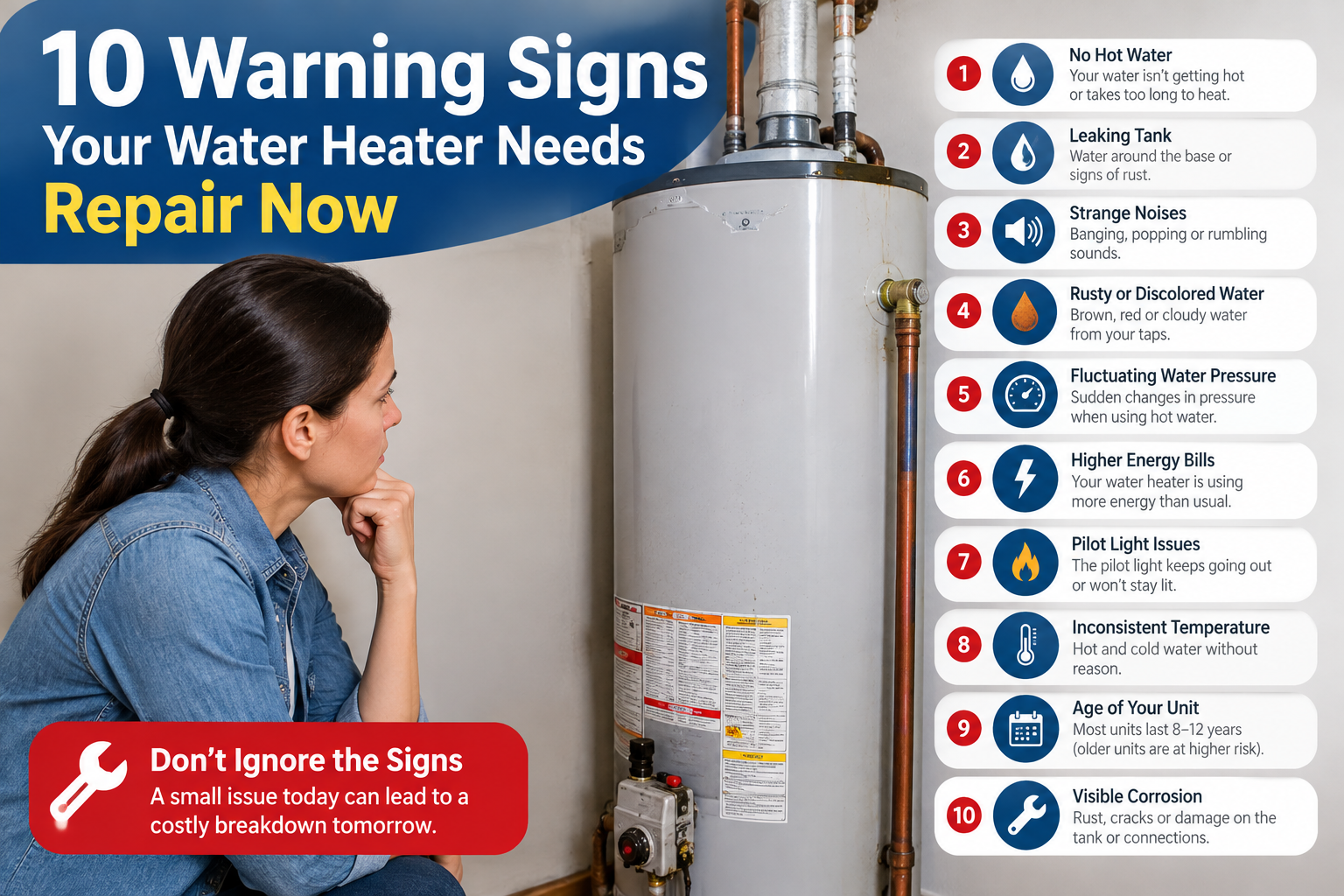
If the thermostat has always been set to the same temperature but showers suddenly feel cooler, changing the setting may only mask another problem. Common examples include a heating element beginning to fail, sediment accumulating inside the tank, a thermostat that is no longer controlling temperature accurately, or unusually high hot-water demand.
In other words, increasing the temperature should not automatically be the solution to poor hot-water performance.
Water heating requires energy every time the system raises incoming cold water to the thermostat’s target temperature. With a conventional storage-tank water heater, energy may also be used periodically to maintain that temperature while the water sits inside the tank.
As a result, unnecessarily high water heater temperature settings can increase energy consumption. The Department of Energy includes lowering water heater temperature to around 120°F among its home energy-saving recommendations. Department of Energy home energy checklist
That does not mean homeowners should continually change the thermostat trying to minimize energy use. Reliable performance, adequate hot water, household safety, and manufacturer recommendations should all be considered together.
If energy consumption seems unusually high even though the temperature is reasonable, the thermostat may not be the real cause. The condition of the water heater, sediment buildup, equipment efficiency, hot-water usage, plumbing configuration, and the age and type of the system can all affect performance.
If your water heater is too hot, lowering the setting deserves attention rather than simply accepting hotter water as normal.
Water becomes increasingly capable of causing serious burns as temperatures rise. This is especially important in households with young children, older adults, or anyone who may have difficulty reacting quickly to unexpectedly hot water. The CPSC specifically recommends approximately 120°F as a way to reduce tap-water scalding risk.
Signs that your water heater temperature may be too high include:
An unexplained temperature increase is particularly important. If nobody has adjusted the water heater thermostat setting, unusually hot water can sometimes indicate a thermostat or control problem.
If nobody changed the thermostat, unexpectedly hot water may indicate a thermostat, control, heating element, or other equipment problem. A technician should inspect the heater if the temperature becomes unpredictable or potentially unsafe.
For many residential households, yes. Approximately 120°F is commonly recommended as a practical balance between hot-water comfort, energy use, and scalding protection. Individual circumstances may justify a different setting.
You do not need to constantly adjust the thermostat. However, checking the actual hot-water temperature can be useful if you notice a change in comfort, unusually hot water, poor recovery, or inconsistent performance. Periodic water heater maintenance can also help identify problems affecting temperature.
Hot water should not constantly swing from very hot to noticeably cool during normal use. Some variation is expected as the tank is depleted and reheated, but significant or unpredictable fluctuations deserve further investigation.
Several conditions can contribute to inconsistent water heater temperature:
For example, an electric tank water heater typically relies on heating elements controlled by thermostats. If one component is not working correctly, the homeowner may experience warm water that quickly turns cold or inconsistent recovery after several showers.
Tankless systems behave differently. Temperature fluctuations may relate to flow rate, incoming water temperature, maintenance needs, equipment sizing, or system controls rather than stored water running out.
A water heater thermostat is responsible for telling the system when heating should begin and when the target temperature has been reached. When that control stops operating correctly, simply adjusting the dial may not solve the problem.
Thermostat problems can produce several different symptoms. Water may remain lukewarm even when the setting appears correct. In other situations, the water heater may heat beyond the expected temperature. Electric water heaters can also have more than one thermostat and heating element, adding another layer to diagnosis.
Homeowners should be particularly cautious about removing electrical access panels or testing energized components without the appropriate experience. Water heaters can involve high-voltage electrical connections, gas components, hot surfaces, pressurized water, and extremely hot water.
If changing the thermostat setting does not produce predictable results, professional water heater repair may be more appropriate than repeatedly turning the temperature higher.
Temperature problems become more concerning when they represent a change from the water heater’s normal performance.
Suppose a household has consistently had enough hot water for two showers, but recently the second shower becomes cold halfway through. If household usage has not changed, the thermostat setting alone may not explain the difference.
Other warning signs include:
A qualified technician can determine whether the cause is a relatively isolated component problem, a maintenance issue, or deterioration significant enough that water heater replacement should be considered.
A water heater temperature setting in Florida generally follows the same basic safety and performance considerations as elsewhere in the country. However, local conditions can affect how a system performs.
Incoming water temperature, household usage, water quality, installation location, plumbing layout, and equipment type can all change how quickly water reaches the desired temperature and how efficiently the system operates. Water characteristics can also vary between municipal water systems, which means sediment and mineral accumulation will not necessarily occur at the same rate in every Florida home.
Because of this, homeowners in Broward County and other Florida communities should evaluate the entire system rather than assuming every temperature problem can be corrected at the thermostat. Homeowners looking specifically for help with water heaters in Broward County can have the heater evaluated based on its equipment type, condition, installation, and actual hot-water performance.
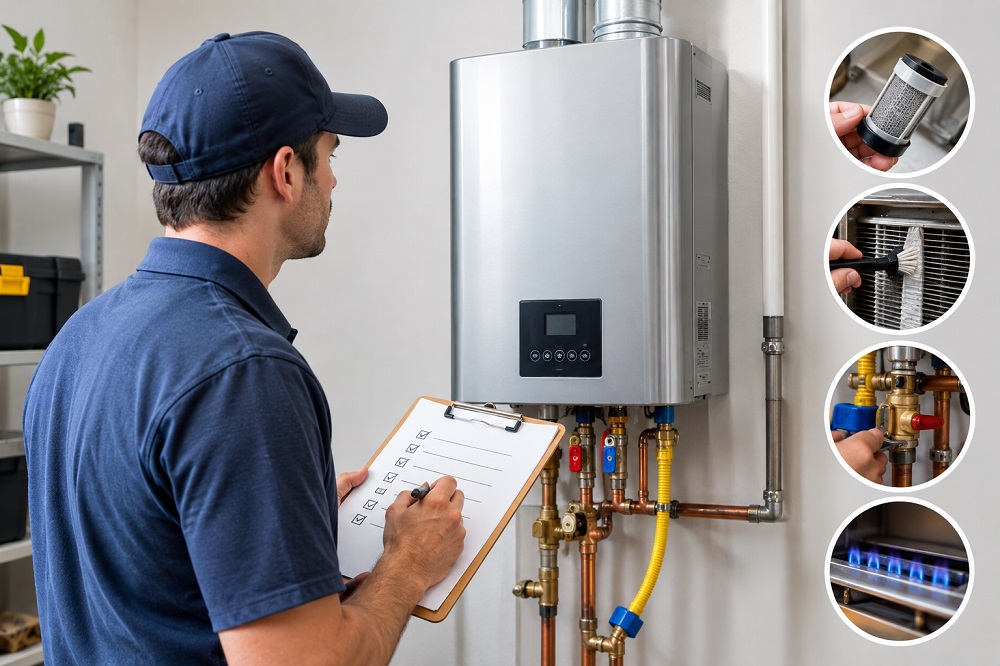
Regular water heater maintenance gives homeowners an opportunity to identify problems before they become major temperature or reliability issues.
Storage-tank systems can gradually collect sediment at the bottom of the tank. Depending on the water supply and system conditions, that buildup can interfere with heat transfer, contribute to noise, and affect overall heater performance.
Routine maintenance may include checking the system’s condition, inspecting for leaks or corrosion, examining appropriate components, and performing maintenance recommended by the manufacturer.
For applicable storage systems, professional water heater flushing can help remove accumulated sediment. The CDC also recommends following manufacturer instructions for flushing water heaters and notes that many manufacturers recommend periodic flushing.
Maintenance cannot prevent every equipment failure, but it can make it easier to identify developing problems instead of discovering them only after the home loses hot water.
There is no standard repair cost simply because a water heater is producing water at the wrong temperature. The underlying cause determines the work required.
Factors that can affect cost, complexity, and repair time include:
When a system is no longer meeting the home’s hot-water needs, a professional can also help determine whether water heater installation of a different system would provide a better fit.
Changing an accessible temperature control according to the manufacturer’s instructions may be reasonable for some homeowners. Diagnosing electrical, gas, pressure, or internal component problems is different.
Contact a qualified professional if the water heater is leaking, producing dangerously hot water, repeatedly losing heat, tripping a breaker, showing error codes, making unusual sounds, or failing to respond properly to thermostat adjustments.
You should also avoid disassembling electrical or gas components unless you are qualified to do so. Water heaters combine electricity or fuel with hot, pressurized water, so incorrect repairs can create hazards beyond simply losing hot water.
If you are searching for water heater service near you in Florida, having the actual water temperature and equipment operation evaluated can help determine whether the thermostat simply needs attention or whether a larger repair or maintenance issue is developing.