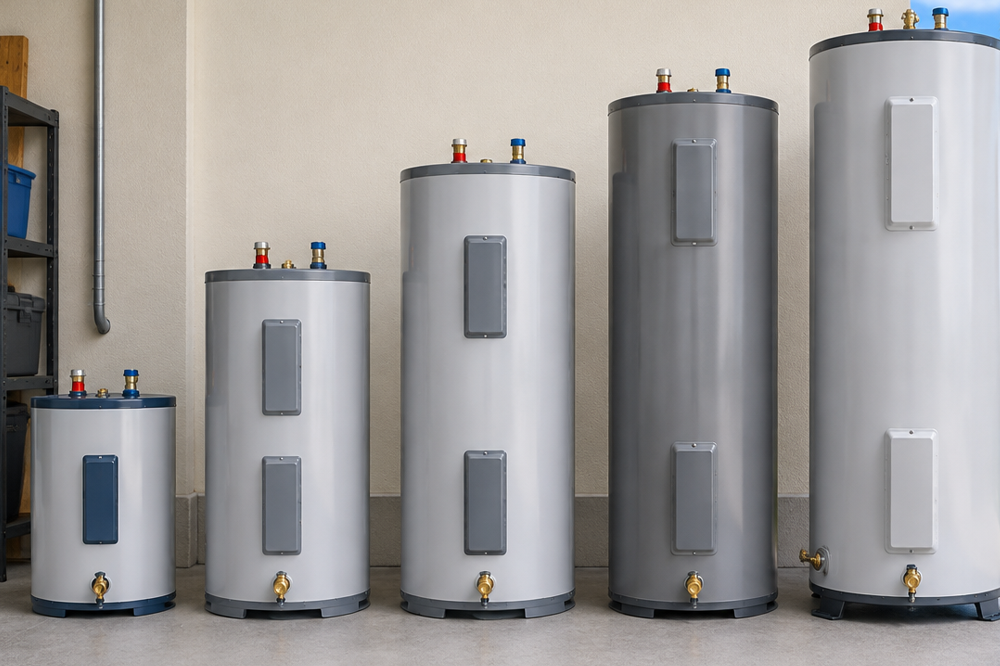

Most people don’t think about their water heater until it stops working, and by then, it’s usually not exactly a small fix anymore. The good news is that water heaters almost always give warning signs before they actually fail. The trick is knowing what to actually pay attention to, since a lot of homeowners write off early symptoms as “probably nothing” until a full breakdown forces the issue.
Here are the ten signs worth taking seriously if you’re in the Jacksonville or Miami area and want to catch a problem before it turns into an emergency.
If your water heater’s started making rumbling, popping, or knocking sounds, that’s usually sediment buildup at the bottom of the tank. As the sediment hardens, it creates hot spots that cause this kind of noise, and over time it makes the unit work harder than it should just to heat water normally.
Rusty or brownish water coming from your hot tap, but not the cold, often points to internal corrosion inside the tank itself. This is one of those signs that’s easy to dismiss the first time it happens, but it tends to get worse, not better, and can eventually lead to a leak.
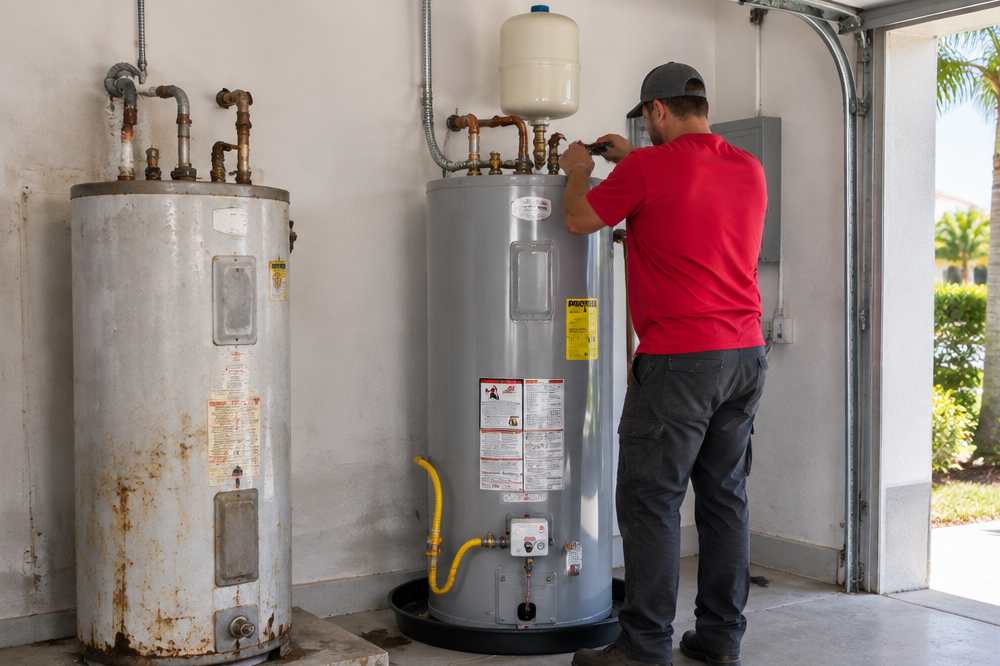
Any pooling or dampness around the base of the water heater should get checked out fairly quickly. It could be a loose fitting, which is a simple fix, or it could mean the tank itself has developed a crack, which usually means replacement rather than repair.
If your showers keep going cold faster than they used to, or the water temperature swings around unpredictably, something’s off with the heating element, thermostat, or in gas units, possibly the burner assembly.
A rotten egg smell near the unit can point to bacteria buildup in the tank, which is unpleasant but usually manageable. A gas smell is a different situation entirely and should be treated as urgent, since it can indicate a leak that needs immediate professional attention.
If you’re noticing any of these issues, our water heater repair miami team can diagnose and fix it fast.
Most tank water heaters last somewhere around 8 to 12 years, and Florida’s water quality tends to push that number toward the lower end. If your unit’s approaching a decade old and starting to show any of these other symptoms, repair might only buy a short amount of time before replacement becomes necessary anyway.
A water heater that’s losing efficiency, whether from sediment, a failing element, or general wear, tends to run longer and harder to hit the same temperature. If your energy bill’s crept up and you haven’t changed your habits, the water heater is worth checking.
For gas water heaters, a pilot light that won’t stay lit is usually a sign of a failing thermocouple or a ventilation issue. It’s not something to keep relighting repeatedly without having it looked at, since it can point to a larger safety concern.
Rust on the outside of the tank, especially near fittings or the bottom seam, often means the tank is corroding from the inside out. Once external rust shows up, internal damage has usually already been progressing for a while.
If your household’s hot water needs haven’t changed but the unit suddenly can’t keep up, running out faster than it used to, that’s often a sign of declining tank efficiency or a sizing mismatch that’s finally catching up with an aging system.
Not every one of these signs means the whole unit needs replacing. A single strange noise or one instance of lukewarm water might just need a straightforward repair. But a few signs together, especially rust, leaking, and reduced performance happening around the same time, usually point toward a unit that’s near the end of its useful life. In those cases, a repair might solve the immediate symptom without addressing the bigger picture, which tends to mean paying for the same problem twice.
Catching these warning signs early is really the difference between a manageable repair and an emergency replacement on a day you weren’t planning for. If any of this sounds familiar, it’s worth getting the unit looked at sooner rather than later.
Pompa Plumbing Group works with homeowners across Jacksonville and Miami to sort out exactly which of these symptoms need a quick fix and which point to something bigger, so you’re not left guessing.
Common signs include unusual noises, rusty water, pooling around the base, inconsistent hot water, and unexplained increases in energy bills.
Rumbling or popping sounds usually mean sediment has built up at the bottom of the tank, forcing the unit to work harder to heat water.
A rotten egg smell often points to bacteria in the tank, while a gas odor may indicate a leak and should be treated as an emergency.
It depends on the issue and the unit's age. A single symptom is often repairable, but multiple issues on an older unit usually point toward replacement.